


Myopia Management
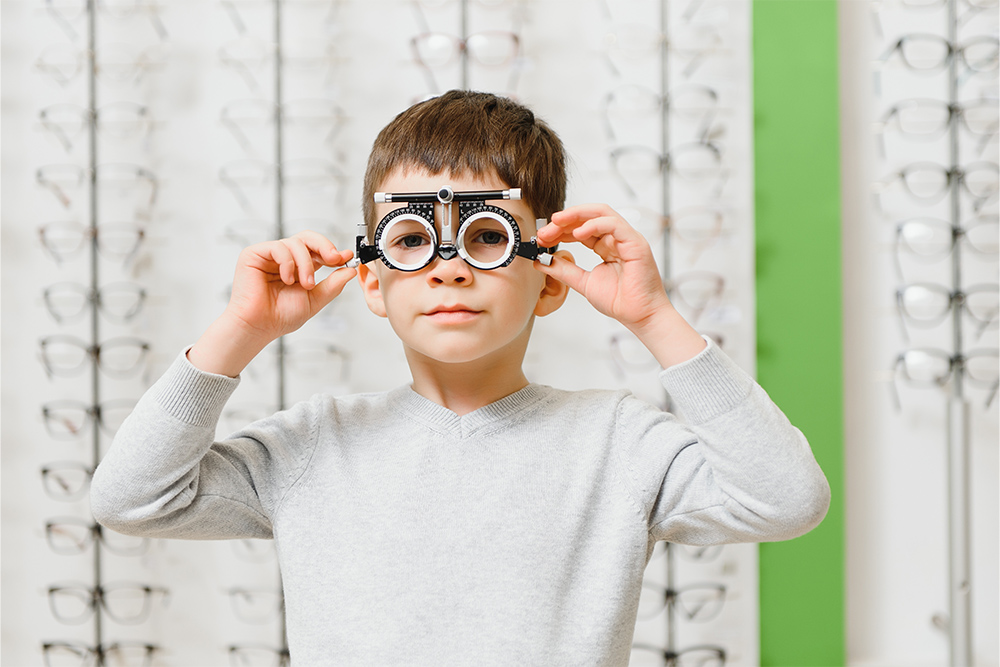
Myopia Management in Everett, WA
Helping Slow Nearsightedness Progression in Children and Teens
Myopia, commonly called nearsightedness, is becoming increasingly common among children and teenagers. A child with myopia can see nearby objects clearly but may have difficulty seeing distant objects clearly. In many children, myopia gradually becomes stronger over time.
At Silver Lake Eye Care Center in Everett, WA, our doctors provide comprehensive myopia management and myopia control to help slow the progression of nearsightedness and protect your child's long-term eye health.
We evaluate each child individually and develop a personalized treatment plan based on their age, prescription, rate of progression, eye health, lifestyle, and visual needs.
Our myopia management options include:
Orthokeratology (Ortho-K)
Stellest spectacle lenses
Myopia-control soft contact lenses
Low-dose atropine eye drops
Combination treatment when appropriate
Ongoing monitoring of prescription and eye health
If your child's glasses prescription continues to become stronger, early myopia management may help slow future progression.
What is Myopia?
Myopia is a refractive error that causes blurry distance vision. In a myopic eye, light focuses in front of the retina rather than directly on the retina, resulting in blurred vision when looking at distant objects.
Myopia often begins during childhood and may continue to progress through the school-age years and teenage years.
A child may have myopia if they:
Squint to see the board at school
Sit unusually close to the television
Hold books or tablets very close to their face
Complain that distant objects look blurry
Have difficulty seeing during sports or outdoor activities
Frequently report headaches or visual discomfort
Have a glasses prescription that becomes stronger every year
Some children may not realize that their vision is blurry because they have gradually adapted to it. This is one reason regular comprehensive eye exams are important.
Why Is Myopia Management Important?
Myopia is more than simply needing stronger glasses.
As myopia becomes more severe, the eye can become longer from front to back. Greater eye elongation is associated with an increased lifetime risk of certain eye diseases, including retinal complications, glaucoma, cataracts, and myopic macular disease.
The goal of myopia management is to slow the progression of myopia and reduce excessive eye growth as early as possible.
Myopia management does not necessarily mean that a child will never need glasses or contact lenses. Instead, treatment is designed to help slow the rate at which myopia progresses.
The earlier progressive myopia is identified, the sooner treatment options can be considered.
How Does Myopia Management Work?
Different myopia management treatments work through different mechanisms.
Some treatments alter the way light is focused on the retina. Others use specialized optical designs or medications to influence signals associated with eye growth.
Because every child's myopia is different, there is no single treatment that is best for every patient.
At Silver Lake Eye Care Center, we consider:
The child's age
Current glasses prescription
Previous prescription changes
Family history of myopia
Eye health
Lifestyle and outdoor activity
Ability to wear and care for contact lenses
Personal preferences of the child and family
We then discuss the available options and recommend a treatment approach that fits the child's individual needs.
Myopia Management for Children in Everett, WA
At Silver Lake Eye Care Center, we provide personalized myopia management for children and teenagers in Everett, Silver Lake, Mill Creek, Mukilteo, Lynnwood, Lake Stevens, and surrounding Snohomish County communities.
Our doctors provide comprehensive eye care and can evaluate your child's overall eye health while discussing options to help manage progressive myopia.
We offer several approaches to myopia management, including:
Ortho-K and specialty contact lenses
Stellest spectacle lenses
Myopia-control contact lenses
Atropine therapy when appropriate
Ongoing monitoring and treatment adjustments
If your child's prescription continues to increase, schedule a myopia management consultation with our team.
Frequently Asked Questions
1. What age should myopia management start?
Myopia management can begin as soon as a child is diagnosed with nearsightedness, often between ages 6 and 12, when the eyes are still growing quickly and progression tends to be fastest. Starting early gives treatment the best chance to slow long-term eye elongation.
2. Is Ortho-K safe for children?
Ortho-K (orthokeratology) uses specially designed contact lenses worn overnight to reshape the cornea temporarily, and it's considered safe when properly fitted and monitored by an eye doctor. As with any contact lens wear, following cleaning and wear instructions is important to reduce the risk of infection.
3. Will my child still need glasses if they do myopia management?
Possibly, but the goal isn't necessarily to eliminate glasses — it's to slow how quickly the prescription worsens over time. Some children still wear glasses or contacts for part of the day even while undergoing treatment.
4. How long does myopia management treatment take?
Myopia management is typically an ongoing, multi-year commitment through the school-age and teenage years, since myopia tends to progress until the eyes stop growing in the late teens. Your doctor will monitor progress at regular visits and adjust the plan as needed.
5. How do I know if my child’s myopia is progressing?
Signs include a glasses prescription that gets stronger at each visit, increased squinting, sitting closer to screens or the TV, or holding reading material closer to the face. Regular comprehensive eye exams are the most reliable way to track progression.
At Silver Lake Eye Care Center, we monitor myopia progression at every visit by evaluating your child's updated glasses prescription and performing an axial length scan, which measures the physical length of the eye. Together, these measurements help us determine not only whether vision has changed, but also whether the eye is continuing to grow too quickly. This allows us to assess how well the current myopia management treatment is working and make adjustments when needed to help slow progression.
Concerned your child's prescription keeps changing? Schedule a comprehensive eye exam at Silver Lake Eye Care Center today.


Contact Us
Let’s keep in touch!

Office Hours
- Monday 8:00am - 5:00pm
- Tuesday 8:00am - 5:00pm
- Wednesday 8:00am - 5:00pm
- Thursday 9:00am - 5:00pm
- Friday 8:00am - 1:00pm
- Saturday Closed
- Sunday Closed
CLOSED for Lunch or Team Training & Education
12:00pm - 1:00pm M - W, and 1:00pm - 2:00pm Thurs
© 2026 Silver Lake Eye Care Center | All rights Reserved | Accessibility Statement | Privacy Policy | Sitemap
Powered by:
